
The rise of car assembly Bangladesh signals a promising shift in the nation’s automotive landscape. Thanks to tax breaks and industrial incentives, global auto brands are investing in local assembly plants, opening doors for affordability, job growth, and a move toward electric vehicle production.
Government Policy Lays the Foundation
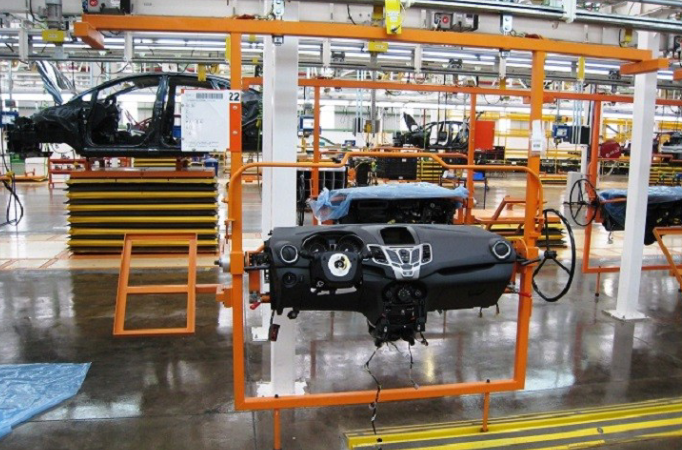
Under the Automobile Industry Development Policy (2021), Bangladesh offers significant incentives for semi-knocked down (SKD) and completely knocked down (CKD) assembly. By slashing import duties to as low as 25%–35% for components, the policy makes car assembly Bangladesh financially appealing. These fiscal benefits also include tax holidays and income tax relief for locally assembled vehicles.
Growth of SKD/CKD Assembly Plants
Global Brands Entering the Market
Since 2022, brands like Hyundai lead the way with their Gazipur plant, making midsize SUVs more affordable and popular. Kia and Mitsubishi have also established CKD operations, helping reduce prices by Tk 7–12 lakh per vehicle. Local assemblers such as Meghna Automobiles and Rancon Group are expanding rapidly under the car assembly Bangladesh initiative.
Electric Vehicle Ambitions
With air pollution and sustainable mobility becoming priorities, Bangladesh is encouraging electric vehicle (EV) assembly. Companies like Bangladesh Auto Industries and Nitol Niloy are developing EV and hybrid plants in economic zones. Targets include producing affordable sedans and SUVs priced between Tk 8–25 lakh, with local battery and motor production underway.
Building the Auto Parts Ecosystem
A fully functional local manufacturing hub requires parts suppliers. The national policy mandates progressive local content buildup—5% in year one rising to 20–30% by year ten. This spurs development in engine, transmission, suspension, and electronics sectors. Over time, car assembly Bangladesh will deepen its value chain, enabling greater self-reliance.
Socio-Economic Impacts
Job Creation and Skill Development
Massive investments—some exceeding Tk 500–1,000 crore—are financing assembly plants and auto parks. This boosts employment in manufacturing, technical services, and R&D, aligning with Bangladesh’s broader industrial ambition for becoming a regional export hub.
Price Accessibility
Local assembly helps cut vehicle prices by 15–40%, making family cars affordable to the middle class. Annual sales are expected to double by 2025, with locally assembled models comprising over 60% of new car purchases.
Challenges Ahead
Quality Standards
Maintaining global quality is crucial. Factory standards must meet strict safety and emissions controls while matching the durability of imported reconditioned models.
Parts Industry Maturity
Local suppliers must advance quickly. Without a robust auto parts ecosystem, CKD assembly could face delays and higher production costs.
Infrastructure & Policy Consistency
To sustain growth, Bangladesh must continuously modernize its economic zones, power supply, and transportation infrastructure, while offering stable policy across administrations.
Outlook for the Future
As Hyundai, Kia, Mitsubishi, Proton, and others steadily expand presence, car assembly Bangladesh is set to transform into a vibrant manufacturing ecosystem. Ongoing EV investments suggest a greener future in the automotive sector. Over the next decade, this could result in a fully localized industry supporting both domestic sales and exports.
Platforms like GarirBazar are beginning to showcase emerging locally assembled and electric offerings, making informed purchase decisions easier.
What locally assembled or electric vehicle are you most excited about? Share your thoughts or ask questions in the comments—let’s discuss the future of Bangladesh’s automotive boom!